
INTRODUCTION
The Zimbabwe Human Rights Commission (ZHRC) is one of the Chapter 12 Independent Commissions established in terms of Sections 232 (b) and 242 of the Constitution of Zimbabwe. It is operationalized by the Zimbabwe Human Rights Commission Act [Chapter 10:30]. The ZHRC has, in terms of Section 243 of the Constitution, a dual mandate, which includes promoting, protecting, and enforcing human rights and fundamental freedoms, as well as protecting people from abuse of power and maladministration by State and public institutions and officers of those institutions.
The Complaints Handling and Investigation and Administrative Justice Department has two Units to carry out its functions in terms of section 243 (1) (d), (e), (f) and (g) of the Constitution. The Department is head by Director, Mrs Kurai Makumbe assisted by Deputy Director – Complaints Handling and Investigations, Ms S.S. Moyo and Deputy Director – Administrative Justice, Mr. T. Kanyimo.
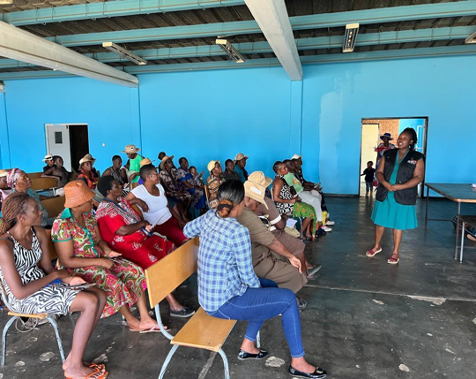
BRIEF ABOUT AJ UNIT
In terms of section 243 (1) (d-e) of the Constitution, the Administrative Justice Unit is responsible for protecting the public against abuse of power and maladministration committed by State and public institutions, as well as their officials. It also has the mandate to receive and consider complaints from the public and to take such action in regard to the complaints as Commission considers appropriate. This function was formerly under the office of the now defunct Public Protector (formerly known as the Ombudsman). The protection of the public from abuse of power and maladministration is done through proactive initiatives which include reviewing public institutions’ client service charters, holding stakeholder engagement meetings, conducting administrative justice hearings, producing policy reform advisory briefs, and assessing local authority service delivery standards.
Examples of cases that the AJ Unit handles include cases of:
- Justice Delay or dereliction of duty: This is the failure to resolve a matter by public office or official within a reasonable time.
- Delay in benefits: This is when a public office or official unjustly withholds a certain benefit due to a person without a valid reason.
- Abuse of office or power: This is when a public official misuses his or her position in an institution to take advantage of individuals or groups against principles of good public administration.
- Justice Denied: This is when a public official or office refuses, fails or neglects to render access to justice.
- Access to documentation: This is when the public faces different challenges to access civil registry documents.
THE STEPS TO TAKE IF ADMINISTRATIVE CONDUCT ADVERSELY AFFECT YOUR RIGHTS
STEP 1: In case of maladministation, exhaust internal remedies within the institutions.
STEP 2: If not assisted, report to the ZHRC.
STEP 3: The ZHRC may conduct an investigation into the reported matter which includes interviewing all relevant sources and witnesses.
STEP 4: ZHRC recommends suitable action or redress to the complainant or any other appropriate person or official.
STEP 5: Recommends prosecution of human rights violators and other appropriate remedies.
Who can lodge a complaint?
- Anyone whose human right, freedom, interest, or legitimate expectation has been adversely affected by administrative conduct or action of any individual.
- Any person on behalf of an individual or a group, whose human right, freedom, interest, or legitimate expectation has been adversely affected.
How a complaint can be lodged with the ZHRC?
A complaint can be lodged by:
- Physically visiting any of the ZHRC offices indicated below.
- Reporting to the ZHRC through hotline phone, SMS, WhatsApp or email, ZHRC website or other social media platforms.